A pool deck is more than just a surface surrounding your pool—it’s where you relax, entertain, and enjoy countless hours with family and friends. But like any part of your home, your concrete pool deck can wear down over time. Knowing when it’s time for a pool deck repair can save you from bigger problems (and costs) down the line.
In this blog, we’ll walk you through the common signs of damage, explain the causes of cracks in pool decks, and offer solutions for repairing pool deck cracks so you can keep your outdoor oasis safe, stylish, and functional.
Why Pool Deck Repairs Are So Important
Ignoring early signs of damage to your pool deck can lead to:
Trip hazards
Water damage to your pool structure
Reduced curb appeal
Higher repair costs later
Whether you have a residential setup or manage a commercial pool, staying ahead of maintenance is crucial to long-term enjoyment and safety.
1. Visible Cracks in the Pool Deck
One of the most obvious signs you need pool deck repair is visible cracks in the pool deck. These cracks can appear small at first, but over time they tend to widen due to:
Soil movement
Houston’s extreme weather changes
Improper initial installation
Lack of expansion joints
Some cracks in pool decks are simply cosmetic, but others may indicate deeper structural issues. If you’re not sure, our team at Rhino Pool Pros offers thorough inspections as part of our remodeling services.
2. Uneven or Sunken Areas
Another red flag is when sections of your concrete pool deck become uneven or sunken. This is often caused by:
Soil erosion
Water pooling underneath the deck
Poor compaction during construction
Uneven surfaces pose serious safety hazards and should not be ignored. Repairing pool deck cracks alone may not be enough—you may need leveling or resurfacing to restore your deck to its original condition.
Check out our full pool deck resurfacing page to learn how we can bring your deck back to life without a full replacement.
3. Surface Flaking or Spalling
If you notice the surface of your concrete pool deck is chipping, flaking, or peeling, you’re likely dealing with a problem called spalling. It often results from:
Poor-quality concrete mix
Freeze-thaw cycles
Water infiltration
This is more than a cosmetic issue. Over time, spalling can degrade the structure of the deck and reduce its lifespan. Our plaster and coating services can restore the surface and prevent further damage.
4. Pooling Water or Drainage Issues
Standing water is not only annoying—it can actually damage your pool deck over time. If your deck isn’t draining properly, it might indicate:
A shift in the deck’s slope
Blocked or inadequate drainage systems
Subtle deck settling
Water damage can speed up the deterioration of your concrete and lead to larger-scale pool deck repairs. It’s best to address drainage problems early on.
Also, be sure to read our guide on how to detect and fix a pool skimmer leak—sometimes water-related issues originate in the plumbing, not just the deck itself.
5. Discoloration or Faded Surface
Is your once-beautiful pool deck now looking dull, stained, or discolored? While this might seem like a minor issue, it can be an early sign of material degradation. Sun exposure, chlorine, and foot traffic all contribute to this fading.
If the surface has lost its sealant or is becoming porous, it’s time to consider repairing your pool deck—and possibly giving it a makeover with tile and coping or a new coating.
How to Repair a Damaged Pool Deck
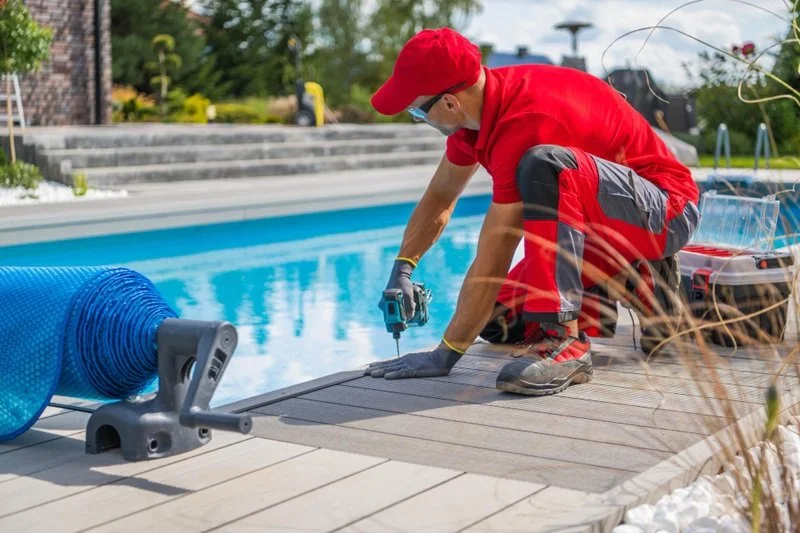
Depending on the extent of the damage, pool deck repair can range from a minor fix to a full resurfacing. Here are common repair solutions:
Filling Cracks
Small, non-structural cracks in the pool deck can be filled with a flexible concrete caulk or epoxy. This stops water infiltration and prevents further expansion.
Grinding & Leveling
Uneven surfaces can be ground down or lifted using slab-jacking methods to restore level footing.
Pool Deck Resurfacing
If the entire surface is worn or unattractive, resurfacing is a great option. This includes:
Cleaning and repairing cracks
Applying a new overlay or texture
Adding color or sealant
Learn more in our step-by-step guide to building your dream pool which includes resurfacing tips.
Preventing Future Pool Deck Problems
After completing your pool deck repairs, take these preventative measures:
Apply a sealer every few years to protect against moisture and stains
Keep an eye out for new cracks in your pool deck
Use anti-slip coatings like those discussed in our post on anti slip paint for concrete
Pressure wash seasonally to remove mildew and buildup
Want a full backyard transformation? Consider pairing your deck project with a new outdoor kitchen or residential pool remodel.
When to Call a Professional
While DIY patching is possible for small fixes, it’s always best to consult professionals for long-term solutions. At Rhino Pool Pros, we offer comprehensive inspections and custom repair plans tailored to your needs and budget.
We handle everything from basic crack repair to full resurfacing and new pool construction projects in the Houston area.
You can even apply for financing to make your renovation affordable and stress-free.
Final Thoughts: Don’t Wait Until It’s Too Late
A damaged concrete pool deck is more than an eyesore—it’s a safety risk. Whether you’re dealing with cracks in your pool deck, surface flaking, or uneven slabs, timely pool deck repair can protect your investment and keep your outdoor area safe and beautiful.
Ready to restore your pool deck? Contact Rhino Pool Pros today for a free assessment and personalized repair plan.